The sun has erupted in a relentless barrage of powerful solar flares over the past 24 hours, firing off at least 18 M-class flares and three X-class flares, including an X8.3 eruption — the strongest solar flare of 2026 so far. Solar flares are ranked by strength from A, B and C up to M and X, with each letter representing a tenfold increase in energy — meaning X-class flares are the most powerful explosions the sun can produce.
The culprit is sunspot region 4366, a volatile active region that has grown rapidly in just a few days. The flurry of activity began late Feb. 1 and has continued into Feb. 2, with multiple M-class and X-class flares erupting in quick succession. The prolific region appears to be far from finished. Spaceweather.com described the region as a "solar flare factory", warning that its rapid growth and magnetic complexity make further eruptions highly likely.
The X8.3 solar flare peaked at 6:57 p.m. EST (2357 GMT) on Feb. 1, unleashing a blast of extreme ultraviolet and X-ray radiation that ionized Earth's upper atmosphere. The flare triggered strong R3 radio blackouts across parts of the South Pacific, with shortwave radio disruptions reported across eastern Australia and New Zealand, according to NOAA's Space Weather Prediction Center.

What does this mean for northern lights?
Scientists are closely watching for signs of any coronal mass ejections (CMEs) that could follow these powerful flares. Early analysis of a CME linked to the recent X8.3 eruption suggests that most of the solar material is likely to pass north and east of Earth, with only a possible glancing blow expected around Feb. 5, according to NOAA's Space Weather Prediction Center.
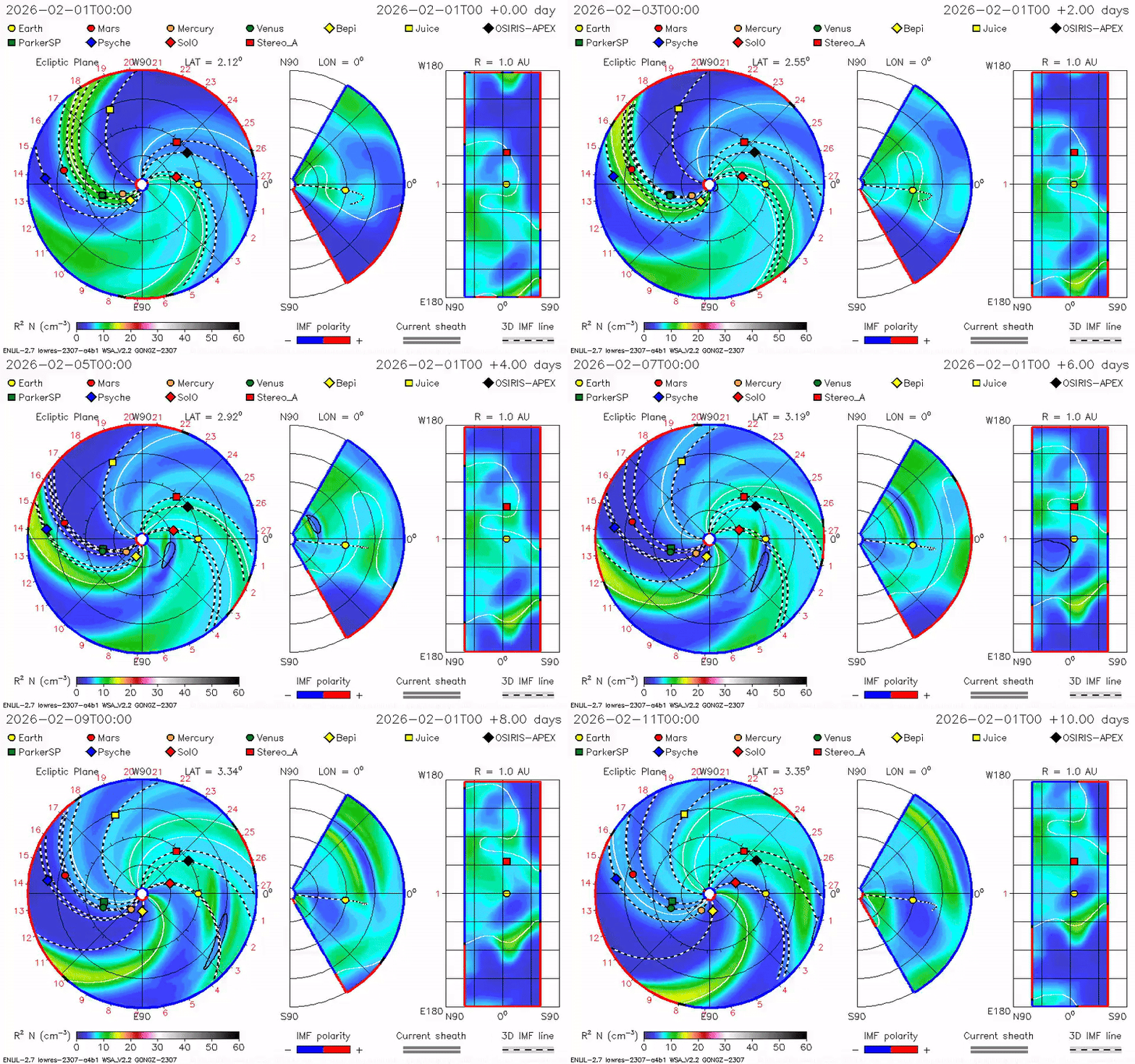
If those glancing impacts materialize, they could briefly elevate geomagnetic activity and increase the chances of auroras at high latitudes. However, forecasters stress that it is too early to know whether conditions will be favorable, as much depends on the CME's speed, direction and magnetic orientation.
It's also possible that more eruptions are still to come. Sunspot AR4366 remains highly active and continues to rotate into an Earth-facing position, raising the chance that future eruptions could launch CMEs more directly toward our planet. NOAA forecasters say they expect more exciting space weather activity from this region in the coming days.
What's an X-class solar flare?
Solar flares are powerful explosions from the sun that emit intense bursts of electromagnetic radiation. They are ranked in ascending strength from A, B, C and M up to X, with each letter representing a tenfold increase in intensity. X-class flares are the strongest eruptions and the number following the X indicates how powerful the event is. Today's flare was measured at X8.3, putting it high in the upper tier of solar outbursts.